
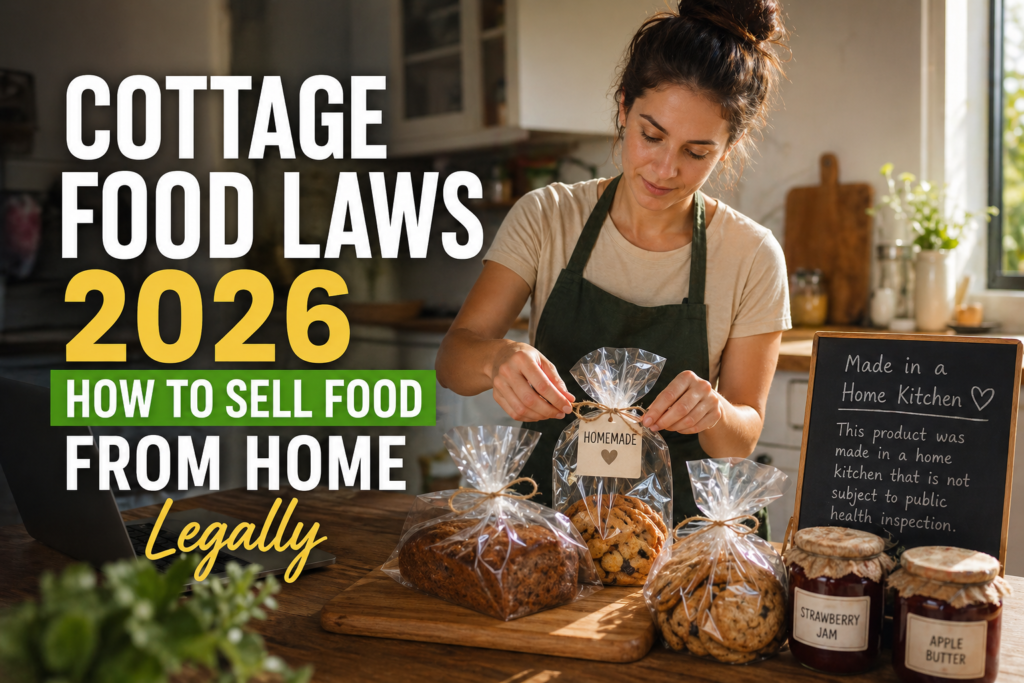
If you are dreaming of turning your family’s secret cookie recipe or famous homemade jam into a profitable business, you are in the right place. The landscape for home bakers has completely shifted, and cottage food laws 2026 are making it easier than ever to turn your home kitchen into a legal, money-making bakery.
We are officially in the era of the “Food Freedom Revolution.” States are raising income limits, lowering barriers to entry, and finally recognizing digital sales. However, selling food from home still requires strictly following your local state regulations to avoid heavy fines.
Here is your complete, step-by-step guide to navigating cottage food laws and launching your home-based food business legally this year.
1. What Are Cottage Food Laws?
Cottage food laws are state-specific regulations that allow individuals to prepare certain low-risk foods in their private, residential home kitchens and sell them directly to the public.
Before these laws existed, anyone wanting to sell a cupcake legally had to rent a commercial kitchen, which costs thousands of dollars a month. Today, cottage food exemptions allow everyday entrepreneurs to launch a food business with almost zero overhead.
The 2026 “Food Freedom” Updates (What is New?)
If you looked into selling food from home a few years ago, you need to look again. The Cottage Food Laws 2026 updates have brought massive changes:
- No More Income Caps (In Many States): Historically, states limited how much money you could make (e.g., capping sales at $10,000/year). In 2026, states like New York have zero revenue caps, and others have indexed their caps to inflation, allowing you to scale without being forced into a commercial kitchen.
- Digital-First Sales are Legal: Almost all states now allow you to take orders online, sell via social media (Instagram/Facebook), and offer local delivery.
- The TCS Breakthrough: Historically, you could not sell anything that required refrigeration. Now, over 9 states (including California, Texas, and Iowa) allow the sale of TCS (Time/Temperature Control for Safety) foods like cheesecakes and savory bakes, provided you pass a specific food safety course.
2. What Can You Actually Sell? (The Approved List)
Under standard cottage food laws, you are restricted to selling “Non-Potentially Hazardous Foods” (often called non-TCS foods). These are items that do not require refrigeration to remain safe from bacterial growth.
The “Always Safe” Green Light List
While every state is slightly different, almost all of them allow the following items:
- Baked Goods: Breads, cookies, muffins, biscuits, rolls, and fruit pies.
- Confections: Fudge, hard candies, brittles, and toffees.
- Preserves: High-acid fruit jams, jellies, and marmalades.
- Dry Goods: Custom spice blends, dried herbs, loose-leaf tea blends, and roasted coffee beans.
- Snacks: Popcorn, granola, and trail mix.
The “Red Light” Prohibited List
Unless you live in one of the progressive “Food Freedom” states that allow TCS foods, you cannot legally sell the following from a home kitchen:
- Meats, poultry, or fish (including jerky).
- Dairy-based products (cheese, milk, yogurt).
- Baked goods requiring refrigeration (cheesecakes, cream pies, custard fillings).
- Low-acid canned goods, fermented foods (kombucha, kimchi), or pickled products.
| Category | Allowed Under Standard Cottage Law? | Example |
| Dry Baking | Yes (Green Light) | Chocolate Chip Cookies, Sourdough Bread |
| High-Acid Preserves | Yes (Green Light) | Strawberry Jam, Apple Butter |
| Dairy/Cream | No (Requires Commercial License) | Cream Cheese Frosting, Custard Tarts |
| Meats/Jerky | No (Federal Regulations Apply) | Beef Jerky, Chicken Empanadas |
3. Step-by-Step: How to Sell Food from Home Legally
Ready to turn on the oven? Here is the exact blueprint to make sure your business is 100% legal and protected.
Step 1: Research Your Specific State Laws
Cottage food laws 2026 are managed at the state level (usually by the Department of Agriculture or Department of Health). Search for your state’s current guidelines to verify exact product allowances and revenue caps.
Step 2: Form a Business Entity (LLC)
While you can operate as a Sole Proprietor, setting up a Limited Liability Company (LLC) is highly recommended. Selling food carries inherent liability risks (e.g., someone having an allergic reaction). An LLC separates your personal assets (your house, your car) from your business assets.
Step 3: Get Your Food Handler’s Certificate
Even in states that do not strictly require it, getting an ANAB-accredited Food Handler’s Card is the smartest thing you can do. It usually costs under $20, takes 90 minutes online, and proves to your customers (and farmers market managers) that you take sanitation seriously.
Step 4: Apply for Your State Registration and Vendor Permits
Most states require you to submit a free or low-cost application to register your home kitchen. Furthermore, if you plan to sell your baked goods in public, you will likely need a local permit.
Pro Tip: Check out our complete guide onHow to Get a Temporary Vendor Permit (USA)to ensure you are legal to sell at local events and pop-up markets!
4. The 2026 Cottage Food Labeling Requirements
You cannot just wrap your banana bread in plastic wrap aYou cannot just wrap your banana bread in plastic wrap and hand it over. To sell food from home legally, your packaging must meet strict labeling laws to protect consumers with allergies. Cottage Food Laws 2026 To sell food from home legally, your packaging must meet strict labeling laws to protect consumers with allergies.
Every single item you sell must have a label clearly displaying:
- Your Business Name and Physical Address: (P.O. Boxes are usually not allowed).
- The Common Name of the Product: (e.g., “Blueberry Muffin”).
- Ingredients List: Listed in descending order by weight.
- Allergen Warning: You must explicitly list if the item contains any of the top 9 FDA major allergens (Milk, Eggs, Fish, Crustacean shellfish, Tree nuts, Peanuts, Wheat, Soybeans, and Sesame).
- The Disclaimer: Your label must state clearly: “Made in a home kitchen that has not been inspected by the Department of Health.”
FAQ: Cottage Food Laws 2026
Do I need a commercial kitchen to sell baked goods?
No. If your products fall under your state’s approved cottage food list (usually non-perishable items like breads, cookies, and jams), you can legally bake and sell them directly from your residential home kitchen.
Can I sell cottage food across state lines?
No. Because cottage food is regulated at the state level and not inspected by the federal FDA, you cannot legally ship or transport your homemade food across state lines. All sales, including online orders, must be made to customers within your own state.
Does my home kitchen need to be inspected?
In most states, no. The majority of cottage food laws 2026 operate on an “exemption” basis, meaning you do not need a pre-approval inspection to start. However, the health department reserves the right to inspect your kitchen if a customer files a complaint regarding food safety.
Can I sell my homemade food to restaurants or grocery stores?
This depends entirely on your state. Some progressive states (like New York) allow wholesale distribution, meaning you can sell your homemade cookies to a local cafe to be resold. However, many states restrict cottage food to “Direct-to-Consumer” sales only, meaning you can only sell at farmers markets, home pickups, or directly via your website.
Strategic Question for You: This post is ready to drop in! I noticed in your dashboard you have a WooCommerce store active. Do you want to add a small section to this post recommending an ebook or template for “Home Bakery Business Plans” or “Recipe Cost Calculators” to monetize this traffic directly?
For more ways to fund your new food business, check out our guide on Apps That Pay Daily 2026. Cottage Food Laws 2026