
Best Materials for Permanent Jewelry business is an exciting move! If you want to stand out at a booth and keep customers happy, you have to be careful about your materials. Selling “gold plated” jewelry as permanent jewelry is actually a huge mistake—it will tarnish and turn your customers’ skin green within weeks.
To run a high-quality booth, here is the breakdown of what you should buy, where to get it, and how to set up your stock.
1. The Best Materials for Permanent Jewelry: Gold-Filled (NOT Gold-Plated)
Most successful permanent jewelry artists use 14k Gold-Filled as their “standard” and 14k Solid Gold as their “premium” option.
- Gold-Plated (Avoid): This has a tiny wash of gold that rubs off fast. It is not suitable for permanent jewelry because it can’t handle 24/7 wear.
- Gold-Filled (The Sweet Spot): This is 100x thicker than plating. The gold is mechanically bonded to the base metal, so it doesn’t rub off or tarnish easily. It is much more affordable than solid gold but looks identical. Gold-filled jewelry can last 10–30 years with proper care.
- 14k Solid Gold (The Luxury Option): This is the highest tier. It never tarnishes and holds its value, but it is much more expensive to stock.
2. What to Buy (Top Chain Styles)
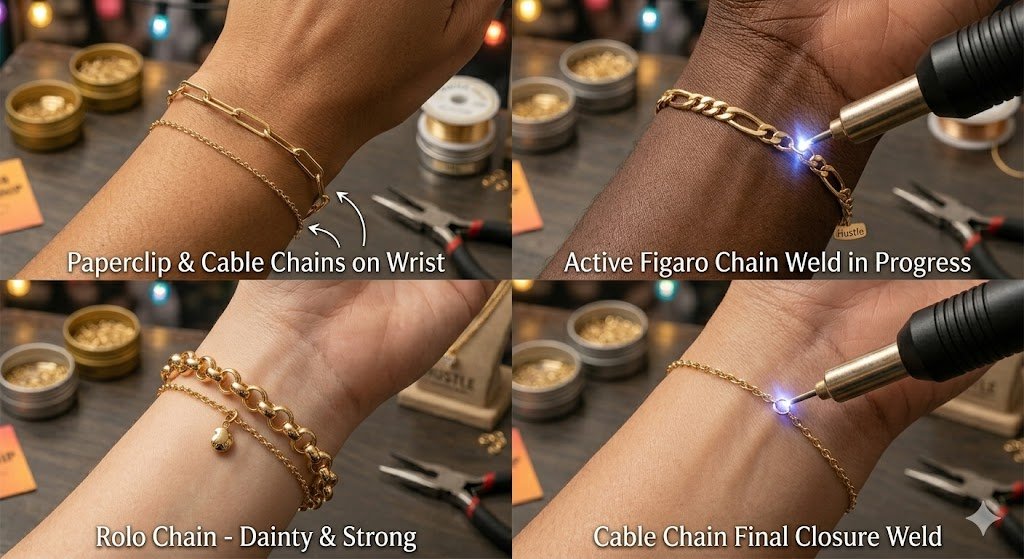
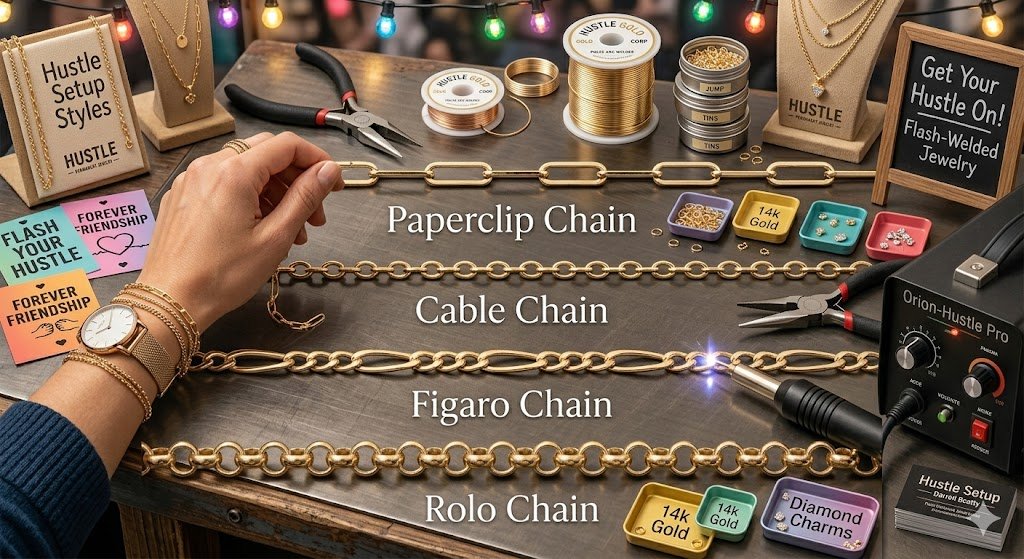
When you’re starting, you don’t need 50 styles. Stick to these top-selling “classics” that people love:
- Paperclip Chain: The #1 most popular style for bracelets. It’s trendy and easy to weld.
- Cable Chain: A simple, dainty classic for people who want a “minimalist” look.
- Figaro Chain: Great for a slightly more masculine or patterned look.
- Rolo Chain: Very strong and comfortable for everyday wear.
3. Where to Obtain Your Stock
You should buy your chain “by the foot” from wholesale suppliers. This allows you to cut the exact length for each customer’s wrist or neck.
- Ross Metals: Excellent for 14k gold-filled and solid gold chains with no order minimums.
- Sunstone Welders: They specialize specifically in permanent jewelry and offer “certified” chains that are tested for durability.
- Honey Boutique: A good place to see variety, as they often carry over 70 different styles.
4. How to Buy and Price
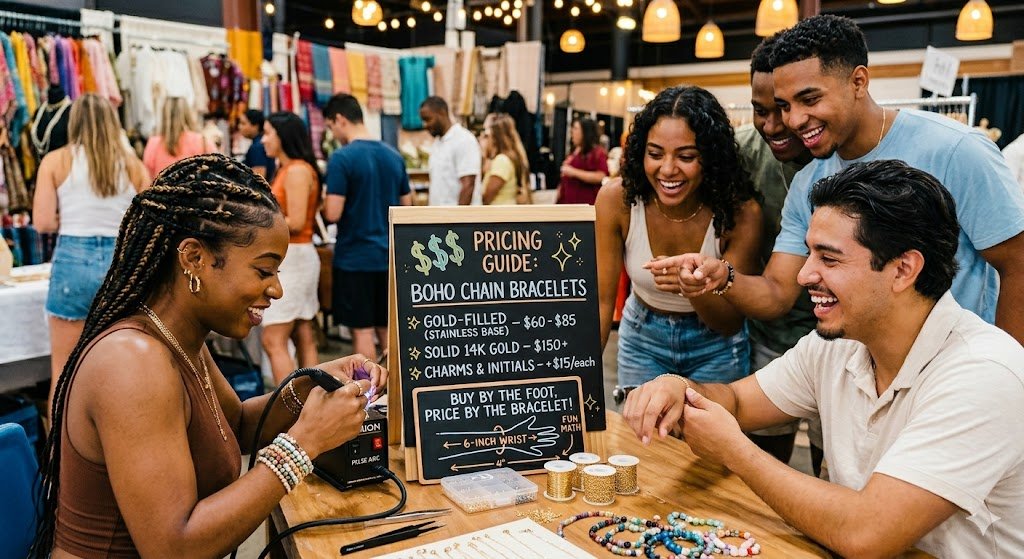
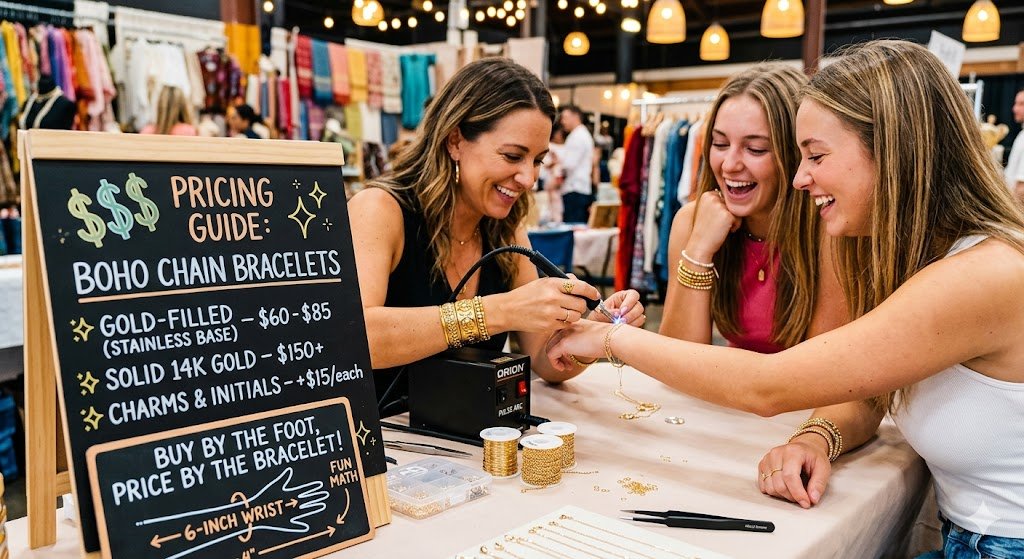
- The Math: You buy the chain by the foot (e.g., $5–$15 per foot for gold-filled). A standard bracelet is about 6–7 inches.
- Pricing: Most vendors charge by the inch or a flat fee per bracelet. For example, gold-filled often sells for $50–$80 per bracelet, while solid gold can be $150+.
- Jump Rings: Don’t forget to buy matching 14k gold-filled and solid gold jump rings. These are the small loops you weld shut to “lock” the jewelry on.
Quick Pro-Tip: When you’re at a booth, keep your chain on small spools. It makes your setup look professional and prevents the chains from getting tangled while you’re busy with customers!
Are you planning to use a pulse arc welder (like an Orion or Zapp) for your booth?