
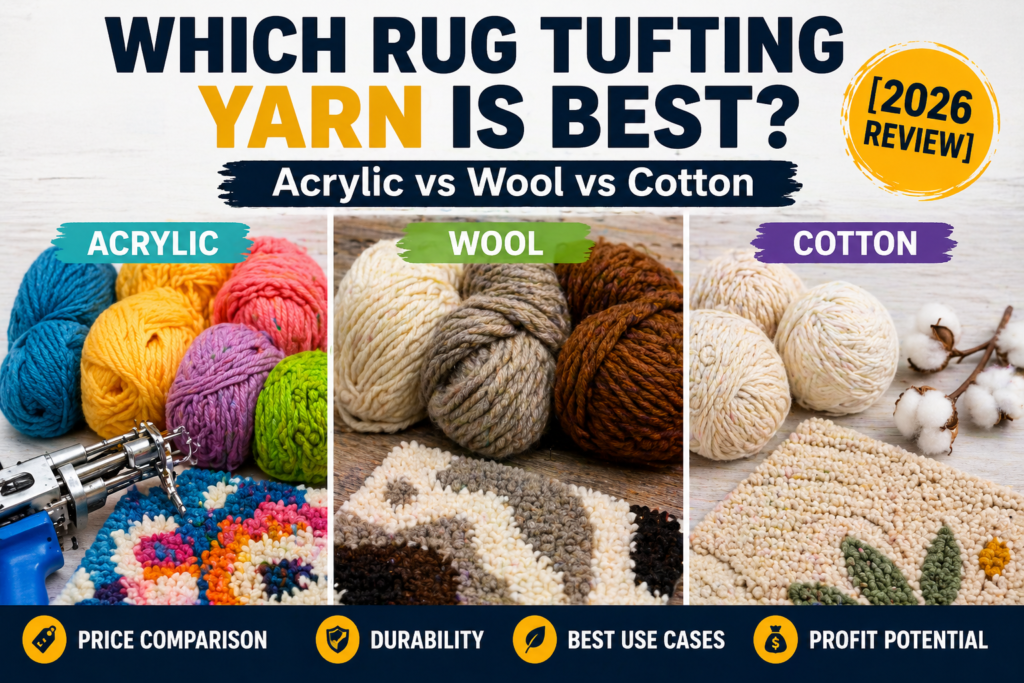
At a Glance: Which Yarn Should You Choose?
- Best for Beginners: Acrylic (Low cost, easy to find).
- Best for Professionals: Wool (Highly durable, premium resale value).
- Best for Wall Art: Cotton (Soft texture, natural look).
🧠 Introduction: Why Yarn Choice Decides Your Results
Finding the best rug tufting yarn is the most important step in moving from a beginner to a pro tufter.” If you’re trying to rank, sell, or scale a rug tufting business in 2026, you need to understand one thing clearly:
“Choosing the right materials is the foundation of any profitable rug tufting business.”
👉 Your yarn choice determines your rug quality, durability, and resale value.
Most beginners fail because they:
- Use cheap yarn without understanding it
- Focus only on tools instead of materials
- Ignore durability
But experienced tufters know:
👉 The difference between a $100 rug and a $1000 rug is often the yarn.
This guide breaks down:
✔ Acrylic vs wool vs cotton yarn
✔ Which yarn is best for rug tufting
✔ What professionals actually use
✔ How to choose based on profit, durability, and use
🧵 What Is Rug Tufting Yarn?
Rug tufting yarn is the fiber used in a tufting gun to create rugs by pushing strands through backing fabric and securing them with glue and finishing.
Unlike regular yarn, tufting yarn must:
- Handle friction
- Maintain shape
- Feed smoothly through a tufting gun
👉 Using the wrong yarn causes:
- Fraying
- Weak structure
- Poor finish
🏆 Quick Answer (Featured Snippet Ready)
Which rug tufting yarn is best?
The best rug tufting yarn depends on your goal. Acrylic yarn is best for beginners because it is affordable and easy to use, while wool yarn is best for durable, high-quality rugs. Cotton yarn is best for decorative or low-traffic rugs but is not ideal for heavy use.
🔹 Acrylic vs Wool vs Cotton (Core Comparison Section)
Why This Comparison Matters for SEO
Google ranks content that:
- Helps users decide
- Compares real options
- Matches search intent
👉 That’s why this section is key for ranking.
⚖️ Acrylic vs Wool vs Cotton Comparison Table
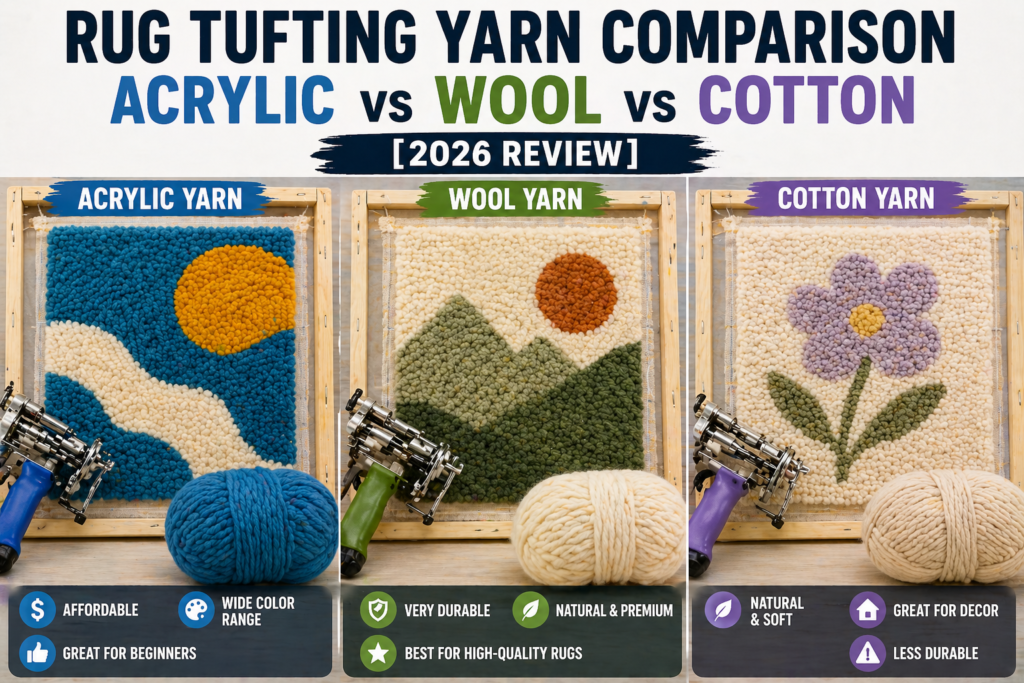
| Feature | Acrylic Yarn | Wool Yarn | Cotton Yarn |
|---|---|---|---|
| Price | Cheap | Expensive | Medium |
| Durability | Medium | High | Low |
| Texture | Synthetic | Premium | Soft |
| Best Use | Beginners | Premium Rugs | Decor |
| Longevity | Medium | Long-lasting | Short |
What is the Best Yarn Weight for Tufting?
For the best results with a standard tufting gun, use Medium (Weight 4) or Bulky (Weight 5) yarn.
- Why it matters: If your yarn is too thin, the rug will look sparse. If it’s too thick, it will jam your gun.
- Pro Tip: If you only have thin yarn, use 3 strands at once to achieve a professional density.
🔹 Acrylic Yarn for Rug Tufting (Best for Beginners)
✅ Why Acrylic Yarn Is Popular
Acrylic yarn is widely recommended for beginners because it is:
- Affordable
- Easy to find
- Available in many colors
- Easy to use
👉 Many tufting guides confirm acrylic is beginner-friendly due to cost and accessibility
❌ Acrylic Yarn Weaknesses
Acrylic has limitations:
- Less durable than wool
- Can pill or fray over time
- Not ideal for floor rugs
👉 Acrylic fibers can break down and fuzz with wear
💡 Best Use Cases for Acrylic Yarn
Use acrylic yarn for:
- Practice rugs
- Wall art
- Budget rugs
- Learning tufting
👉 It’s not built for heavy foot traffic.
💰 Acrylic Profit Strategy
- Cost: $20–$40
- Sell: $100–$250
👉 High margin, low risk
🔹 Wool Yarn for the best rug tufting yarn (Best Overall)
✅ Why Wool Is the Best Yarn for Rug Tufting
Many professionals agree that wool is the best rug tufting yarn for high-traffic floor rugs.
Wool is considered the top-tier yarn because:
- Extremely durable
- Holds shape under pressure
- Resistant to dirt
- Ideal for floor rugs
👉 Wool is widely used in carpets due to its durability and resilience
👉 Tufting guides confirm wool is the strongest and most durable option
🧠 Why Wool Performs Better
Wool fibers:
- Bounce back after pressure
- Maintain structure
- Resist wear
👉 That’s why it’s used in high-end rugs.
❌ Downsides of Wool
- Expensive
- Harder to source
- Slightly harder to tuft
💡 Best Use Cases for Wool Yarn
Use wool for:
- Floor rugs
- Premium rugs
- Long-lasting products
- High-ticket sales
💰 Wool Profit Strategy
- Cost: $80–$150
- Sell: $300–$1000+
👉 Higher upfront cost, bigger return
🔹 Cotton Yarn for Rug Tufting (Limited Use)
✅ Cotton Benefits
- Soft
- Natural fiber
- Easy to handle
❌ Cotton Weaknesses
Cotton yarn:
- Lacks durability
- Flattens easily
- Not strong for heavy use
👉 Cotton has moderate hold but is not “indestructible”
💡 Best Use Cases for Cotton Yarn
Use cotton for:
- Decorative rugs
- Wall pieces
- Light-use designs
🧠 What Professionals Actually Use
Most experienced rug tufters use:
- 100% wool
- Wool blends
- Premium acrylic blends
👉 Because:
✔ Durability = customer satisfaction
✔ Quality = higher pricing
👉 Some guides confirm wool or premium acrylic blends offer the best balance of durability and performance
🧵 Best Yarn Weight for Rug Tufting
👉 Use: Medium to bulky yarn
Why:
- Better coverage
- Stronger structure
- Faster tufting
👉 Thick yarn helps maintain consistency and durability
⚙️ How Many Strands Should You Use?
👉 Use 2–3 strands at once
Benefits:
- Fuller rugs
- Better density
- Cleaner finish
💡 Pro Tip: Mixing Fibers “In 2026, many top tufters are mixing one strand of wool with one strand of acrylic. This gives you the premium look of wool with the cost-savings and color variety of acrylic. It’s a great way to boost your margins without sacrificing quality.
🧠 How to Choose the best rug tufting yarn(Step-by-Step Guide)
Step 1: Define Your Goal
- Learning → Acrylic
- Selling → Wool
- Art → Cotton
Step 2: Consider Durability
High traffic:
👉 Wool
Low traffic:
👉 Acrylic or cotton
Step 3: Consider Budget
Low budget:
👉 Acrylic
High budget:
👉 Wool
Step 4: Test Before Full Project
Always test yarn before committing.
🚨 Common Mistakes to Avoid
❌ Using thin yarn
❌ Using single strand
❌ Choosing cheap yarn for premium rugs
❌ Not testing yarn
❌ Ignoring durability
🔗 Where to Buy the best Rug Tufting Yarn
Trusted sources:
- https://www.walmart.com
- https://www.amazon.com
- https://www.joann.com
- https://www.tuftinggun.com
- https://www.etsy.com
“Once you’ve picked your yarn, you’ll want to check out our guide on starting a rug business to turn your hobby into profit
📈 How Yarn Choice Affects Your Business
Your yarn determines:
- Pricing
- Customer satisfaction
- Brand perception
Strategy Breakdown
Cheap Model:
- Acrylic
- Fast production
- Lower prices
Premium Model:
- Wool
- Higher pricing
- Strong branding
🚀 Scaling Strategy for 2026
- Start with acrylic
- Learn skills
- Sell small rugs
- Switch to wool
- Raise prices
- Build brand
❓ FAQ
What is the best yarn for rug tufting?
The best yarn for rug tufting is acrylic for beginners and wool for durable, high-quality rugs.
Is acrylic yarn good for rug tufting?
Yes, acrylic yarn is affordable and beginner-friendly but less durable than wool.
What yarn do professionals use for tufting?
Professionals typically use wool or wool blends for durability and premium quality.
Can I use cotton yarn for tufting?
Yes, but it is best for decorative or low-traffic rugs.
How much yarn do I need?
- Small rugs: 2–5 skeins
- Large rugs: 10+ skeins
🧠 Final Thoughts
“Ultimately, choosing the best rug tufting yarn for your specific project depends on whether you value low startup costs or long-term durability.
If you’re serious about ranking and making money in rug tufting:
👉 Start simple
👉 Upgrade materials
👉 Build skill
👉 Charge more
Because the truth is:
👉 The best yarn isn’t just about material…
👉 It’s about how you use it to create value.