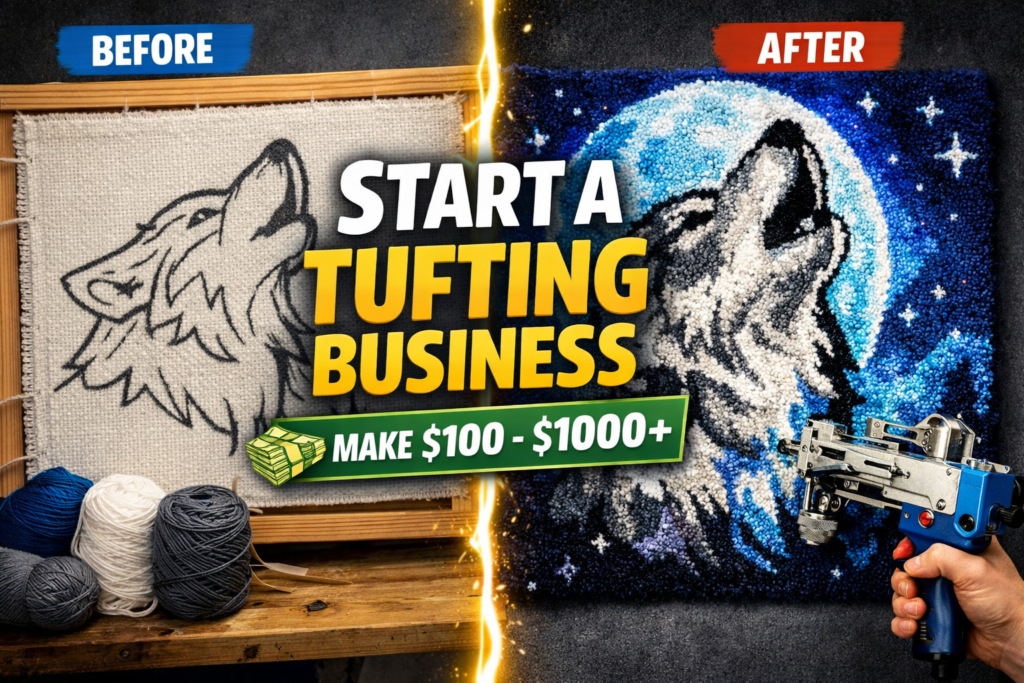
Starting a rug tufting business is one of the most creative side hustles you can build from home. You can make custom rugs for bedrooms, gaming rooms, nurseries, offices, brands, influencers, pets, and local businesses. The best part is that every rug can become content for TikTok, Instagram, Pinterest, Etsy, and Facebook Marketplace.
But a rug tufting business is not only about buying a tufting gun and making cute designs. To make real money, you need the right setup, simple beginner products, a clear pricing system, good photos, a selling platform, and a repeatable order process.
This guide will show you how to start a rug tufting business step by step in 2026 without confusing you with too many advanced details. If you are completely new to side hustles, you may also want to read these side hustle tips for beginners before investing in tools.
What Is a Rug Tufting Business?
A rug tufting business is a handmade product business where you create custom rugs using a tufting gun, yarn, fabric, glue, backing material, and finishing tools. Customers may order rugs based on colors, logos, characters, names, pets, room themes, or original designs.
You can sell tufted rugs as:
- Custom bedroom rugs
- Logo rugs for small businesses
- Gaming room rugs
- Anime or character-inspired rugs
- Pet portrait rugs
- Wall art rugs
- Mini rugs and coasters
- Gift rugs for birthdays or holidays
- Event booth products
The business can start small from a bedroom, garage, spare room, or home studio. Over time, it can grow into a full handmade brand with custom orders, ready-made drops, local events, and online sales.
Is Rug Tufting a Good Business in 2026?
Rug tufting can be a good business in 2026 if you treat it like a real handmade brand instead of only a hobby. The demand comes from people wanting custom decor, personalized gifts, unique room pieces, and handmade products that do not look mass-produced.
Rug tufting works well because it is visual. A video showing a rug going from sketch to finished product can attract attention quickly on TikTok, Instagram Reels, YouTube Shorts, and Pinterest.
However, this business is not automatic money. You need patience, practice, clean finishing, strong photos, and realistic pricing. If you want only fast cash with no learning curve, rug tufting may feel slow at first. But if you enjoy creative work, it can become a strong product-based side hustle.
Step 1: Choose Your Rug Tufting Niche
Before buying too much equipment, choose the type of rugs you want to make. A niche helps customers understand your style and helps you create content faster.
Good beginner rug tufting niches include:
- Custom name rugs
- Gaming room rugs
- Pet rugs
- Logo rugs for local businesses
- Minimal aesthetic rugs
- Cartoon-style rugs
- Sports-themed rugs
- Kids room rugs
- Small wall decor rugs
Avoid starting with very complicated portraits, tiny letters, or huge rugs if you are still learning. Start with simple shapes and clean designs. Your first goal is not to impress everyone. Your first goal is to make rugs you can finish properly and sell confidently.
Step 2: Get the Basic Rug Tufting Tools
You do not need the most expensive setup on day one, but you do need reliable beginner tools. Cheap tools can slow you down if they break, jam, or create messy results.
Your basic setup should include:
- Tufting gun
- Tufting frame
- Primary tufting cloth or monk cloth
- Yarn
- Rug adhesive or glue
- Backing fabric
- Scissors
- Clippers or carving tools
- Projector or drawing method
- Staple gun or fabric grippers
- Protective mask or ventilation setup when using glue
- Packaging supplies
The tufting gun is the main tool, so choose carefully. If you are not sure which one to buy, read this separate guide on the best tufting gun for beginners. That article covers equipment choice in more detail so this business guide does not become an equipment-only post.
Step 3: Understand Your Startup Costs
A beginner rug tufting setup can cost a few hundred dollars or more depending on tool quality, frame size, yarn amount, and finishing supplies. Do not spend all your money on fancy colors and huge frames at the start. Buy enough to practice, make samples, and complete your first few paid orders.
| Startup Item | Purpose | Beginner Cost Range |
|---|---|---|
| Tufting gun | Main tool for inserting yarn into cloth | $100–$300+ |
| Frame | Holds the fabric tight while tufting | $40–$150+ |
| Primary cloth | Base fabric for tufting | $20–$80+ |
| Yarn | Main rug material | $50–$200+ |
| Glue and backing | Finishes and secures the rug | $30–$100+ |
| Finishing tools | Trimming, carving, and cleaning edges | $30–$150+ |
| Packaging | Shipping and presentation | $20–$80+ |
These are general beginner ranges. Your actual cost can change based on your country, supplier, shipping, and tool quality. Start small and upgrade after you know which rug styles sell best.
Step 4: Choose the Right Yarn and Materials
Yarn choice affects how your rugs look, feel, and last. Some yarn is soft and colorful but may not be strong enough for floor rugs. Other yarn may be more durable but harder to trim cleanly.
For beginners, focus on yarn that is easy to work with, available in enough colors, and suitable for the type of rug you want to make. If you are making wall art rugs, softness and color may matter more. If you are making floor rugs, durability matters more.
You can learn more in this dedicated guide on the best rug tufting yarn. Keep this page focused on starting the business, then use the yarn guide when you are ready to choose materials.
Step 5: Practice Before Taking Paid Orders
Do not accept complicated custom orders before you can make clean sample rugs. Practice first. Your early rugs will teach you how tight to stretch the fabric, how fast to move the gun, how much yarn you use, how glue behaves, and how long trimming takes.
Practice these skills before selling:
- Straight lines
- Curved lines
- Simple shapes
- Color changes
- Clean edges
- Basic carving
- Backing application
- Photo and video presentation
Make 3 to 5 sample rugs before you launch. These samples can become your first portfolio, social media content, and product photos.
Step 6: Create Your First Sellable Rug Collection
Instead of offering unlimited custom designs immediately, create a small beginner collection. This makes your business easier to manage and easier for customers to understand.
A simple first collection could include:
- 2 mini rugs
- 2 medium room decor rugs
- 1 custom name rug example
- 1 logo-style rug example
- 1 wall art rug
This gives customers proof that you can actually finish a rug. It also gives you content to post before asking people to order.
Step 7: Price Your Rugs Correctly
Pricing is where many beginners lose money. Do not charge only for yarn. Your price should include materials, time, complexity, finishing, selling fees, packaging, shipping, and profit.
A simple beginner formula is:
Materials + Labor + Complexity + Fees + Packaging + Profit = Final Rug Price
This article is only giving the basic idea because pricing needs its own full guide. For complete pricing examples, size tables, deposits, shipping costs, and custom order formulas, read how to price tufted rugs.
Step 8: Decide Where You Will Sell
You can sell tufted rugs online, locally, or through both. Your best platform depends on your style, audience, and budget.
Popular selling options include:
- TikTok
- Etsy
- Facebook Marketplace
- Local pop-up events
- Your own website
- Custom order forms
Etsy can be useful for handmade products, but always understand the rules and fees before listing. Etsy has an official guide on how to open an Etsy shop and a separate page explaining fees and taxes for selling on Etsy.
If you want to sell without depending only on marketplaces, build your social media audience and collect customer inquiries directly.
Step 9: Use Social Media to Get Customers
Rug tufting is perfect for short-form video because people enjoy watching the process. Your content should show the transformation from design to finished rug.
Content ideas include:
- Sketch to rug videos
- Tufting process clips
- Before and after rug reveals
- Trimming and carving videos
- Customer order packaging
- Room decor styling
- Behind-the-scenes mistakes
- Finished rug close-ups
Do not only post the final rug. Show the process. The process makes people trust the handmade value.
If you want a focused marketing plan, read how to sell your tufted rugs fast using social media. That article should be your marketing guide, while this article stays focused on the full business setup.
Step 10: Set Up a Simple Order Process
A clear order process protects you and the customer. Without a process, custom orders can become confusing and stressful.
Your order process should include:
- Customer sends design idea, size, colors, and deadline
- You confirm if the design is possible
- You give a quote
- Customer pays a deposit
- You create or approve the design
- You make the rug
- You send progress photos if needed
- Customer pays the remaining balance
- You ship or deliver the rug
For custom rugs, use written messages, invoices, or order forms. Do not rely only on memory.
Step 11: Handle Business Basics
Once you start getting real orders, treat the rug hustle like a small business. That means tracking income, expenses, customer payments, materials, shipping, and profit.
The IRS explains that your recordkeeping system should clearly show your income and expenses. You can review the official IRS page on recordkeeping for small businesses.
You should also check what licenses or permits apply in your area. The SBA explains that many small businesses need licenses or permits depending on location, industry, and rules. You can read the SBA guide on licenses and permits.
When orders become consistent, consider separating your money. This guide on how to set up a bank account for a small business can help you stay organized.
Step 12: Build Trust With Buyers
Customers are more likely to buy when they trust your work. Because tufted rugs are handmade, buyers want to see quality, communication, and proof.
Build trust by showing:
- Clear photos
- Process videos
- Customer reviews
- Size examples
- Material details
- Shipping policy
- Deposit policy
- Estimated completion time
- Care instructions
If you use influencer posts, customer reviews, or paid promotions, make sure disclosures are honest. The FTC has guidance about endorsements, influencers, and reviews, including disclosure expectations for advertising and social media.
Common Rug Tufting Business Mistakes
Avoid these beginner mistakes:
- Taking paid orders before practicing enough
- Buying too many supplies before knowing what sells
- Underpricing custom work
- Not charging deposits
- Accepting designs that are too difficult
- Using poor photos
- Not tracking material cost
- Ignoring platform fees
- Not setting delivery expectations
- Trying to copy every trend instead of building a style
Most rug businesses do not fail because the idea is bad. They fail because the seller underprices, overpromises, and does not build a repeatable system.
How to Grow From Hobby to Real Business
After your first few sales, look at what customers actually buy. Do they like logo rugs? Pet rugs? Room decor? Anime-style rugs? Mini rugs? Local business rugs?
Grow by improving what already works instead of starting over every week.
Good growth steps include:
- Create a clear pricing sheet
- Build a small product catalog
- Post process videos consistently
- Collect customer reviews
- Offer limited custom slots
- Create seasonal rug designs
- Sell at local pop-up events
- Build an email list or customer list
- Create a simple website or order form
When the business becomes consistent, read how to turn a side hustle into a real business. That guide will help you think beyond one-time orders.
Final Thoughts
A rug tufting business can be a creative and profitable side hustle if you build it carefully. Start with a simple setup, practice before taking orders, choose a clear niche, price your work properly, and use social media to show the handmade process.
Do not rush into huge custom orders on day one. Build skill first, then build offers, then build systems. Once your rugs look clean and your process is repeatable, you can turn rug tufting from a hobby into a real handmade business.
Next, read how to price tufted rugs so you do not undercharge your first customers.
FAQs About Starting a Rug Tufting Business
How much does it cost to start a rug tufting business?
Many beginners can start with a few hundred dollars, but the cost depends on your tufting gun, frame, cloth, yarn, glue, backing, finishing tools, and packaging. Start small and upgrade after you get orders.
Can rug tufting be profitable?
Yes, rug tufting can be profitable if you price correctly, track your costs, charge for labor, and sell designs customers actually want. Profit depends on your skill, pricing, and demand.
What tools do I need to start rug tufting?
You need a tufting gun, frame, primary cloth, yarn, adhesive, backing material, scissors, trimming tools, and packaging supplies. A projector can also help with design outlines.
Where can I sell tufted rugs?
You can sell tufted rugs on TikTok, Instagram, Etsy, Facebook Marketplace, Pinterest, local events, your own website, or through custom order forms.
Should I take custom rug orders as a beginner?
You can take custom orders after you have enough practice and sample rugs. Start with simple designs first and avoid complex logos, faces, or tiny letters until your skill improves.
Do I need a business license for a rug tufting business?
Requirements depend on your location and how you sell. Check your local rules and review official small business license guidance before treating the business as a full-time operation.
3 Responses