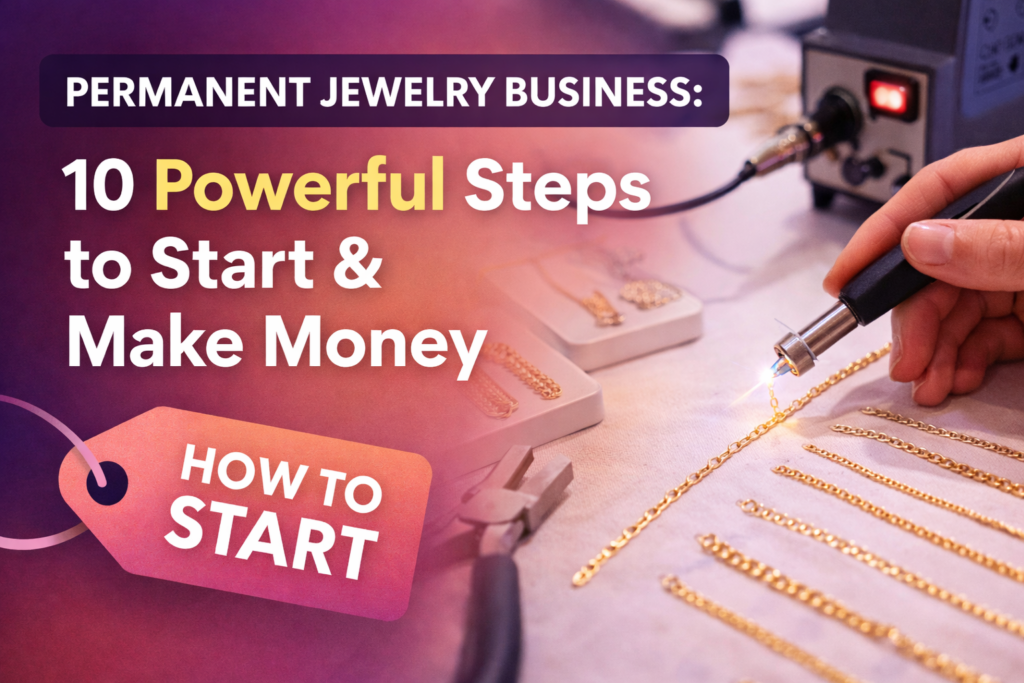
Starting a permanent jewelry business can be a realistic small-business idea for people who enjoy jewelry, pop-up events, beauty services, and hands-on customer experiences. The model is simple: you custom-fit a bracelet, anklet, necklace, or ring, then weld the jump ring closed so the piece does not use a traditional clasp.
The business can be started mobile, from home, at vendor markets, inside salons, at bridal events, or eventually from a kiosk or storefront. But before buying tools or booking events, you need a clear setup plan, simple pricing, safe service flow, and a professional customer experience.
This guide explains how to start a permanent jewelry business step by step, including setup options, startup costs, equipment, pricing, branding, insurance, consent forms, pop-up setup, and marketing.
Permanent Jewelry Business Quick Overview
| Best for | Beginners, mobile vendors, salon partners, pop-up sellers, and jewelry lovers |
| Startup type | Mobile, home-based, pop-up, salon, kiosk, or storefront |
| Main tools | Welder, chains, jump rings, pliers, measuring tape, display setup, and aftercare cards |
| Main challenge | Getting bookings, pricing correctly, and building customer trust |
Step 1: Understand How the Permanent Jewelry Business Works
A permanent jewelry business offers custom-fit jewelry that is welded closed around the customer’s wrist, ankle, neck, or finger. The process is usually quick, but the experience is what makes it popular.
Customers often buy permanent jewelry because it feels personal, stylish, giftable, and event-friendly. It works well for:
- Pop-up events
- Salons and boutiques
- Bridal showers
- Birthday parties
- Mother-daughter appointments
- Malls and retail kiosks
- Private group bookings
Your goal is not just to sell a chain. Your goal is to create a smooth experience: help the customer choose a chain, fit it comfortably, explain the process, weld it safely, and send them home with clear permanent jewelry aftercare instructions.
Step 2: Choose Your Business Setup
Before you buy supplies, decide how you want to operate. Your setup affects your startup cost, schedule, pricing, and marketing.
Common setup options include:
- Mobile permanent jewelry appointments
- Home-based studio
- Pop-up vendor booth
- Salon or boutique partnership
- Mall kiosk
- Full storefront
For most beginners, a mobile or pop-up setup is the easiest starting point. It usually costs less than a storefront and lets you test demand before committing to rent, staff, or a permanent location.
If you want to start mobile, read this detailed guide on mobile permanent jewelry business setup. If you plan to sell at events, you should also prepare your permanent jewelry booth setup before your first pop-up.
Step 3: Estimate Your Startup Costs
Permanent jewelry can be lower-cost than many retail businesses, but it is not free. You need tools, chains, safety items, display materials, packaging, marketing, and business basics.
Your startup budget may include:
- Permanent jewelry welder
- Starter chains
- Jump rings and connectors
- Charms
- Pliers and cutters
- Safety glasses
- Measuring tape
- Table display
- Mirror
- Price menu
- Aftercare cards
- Consent forms
- Payment processor
- Booking system
- Insurance
- Business registration
The biggest cost is usually the welder and starter inventory. Do not spend all your budget on chain styles before you know what customers actually buy. Start with a focused selection, then reorder based on real demand.
For a deeper supply list, use this permanent jewelry starter kit guide and compare it with your permanent jewelry welder kit checklist.
Step 4: Register and Protect the Business
A permanent jewelry service may feel small at the beginning, but it is still a real business. You should treat it professionally from the start.
Depending on your location, your setup may require:
- Business registration
- Local business license
- EIN or tax ID
- Business bank account
- Sales tax setup
- Liability insurance
- Event vendor approval
- Written customer policies
Rules vary by city, state, and country, so check your local requirements before taking paid appointments.
You should also create simple customer-facing policies for repairs, re-welds, lost chains, refunds, cancellations, and event deposits. Clear policies help prevent awkward conversations later.
Before booking events, review your permanent jewelry insurance needs and prepare a permanent jewelry consent form template for customers.
Step 5: Buy the Right Equipment and Supplies
The right equipment makes your service smoother and more professional. You do not need the largest inventory on day one, but you do need reliable tools.
A beginner permanent jewelry setup usually includes:
- Micro welder or permanent jewelry welder
- Welding leads and compatible accessories
- Jewelry pliers
- Chain cutters
- Jump rings
- Gold-filled, sterling silver, or stainless steel chains
- Charms
- Measuring tape
- Safety glasses
- Mirror
- Display trays or chain cards
- Tablecloth
- Price signs
- Aftercare cards
- Booking QR code
If you are still comparing tools, start with this guide to choosing a permanent jewelry welder. You can also compare pulse arc vs laser welder for permanent jewelry before buying equipment.
Start with a few chain styles that are easy to wear every day. Simple chains often sell better than complicated styles because customers want pieces that match many outfits. For material selection, use this guide on the best materials for permanent jewelry.
Step 6: Practice Before Charging Customers
Do not make your first paying customer your first real practice session. Before offering appointments, practice your full service process.
Practice:
- Measuring wrists and ankles
- Choosing the right fit
- Handling jump rings
- Welding cleanly
- Explaining the process
- Removing or repairing pieces
- Cleaning your station
- Managing customer questions
Start with friends or family. Time yourself. Notice where the process feels awkward. Fix those issues before booking public events.
A smooth process builds confidence. Customers can tell when you are calm, organized, and prepared. If you want formal learning, read this guide on permanent jewelry certification requirements.
Step 7: Set Simple and Profitable Pricing
Your pricing should be easy to understand and profitable enough to cover your materials, time, tools, payment fees, event fees, travel, insurance, and profit.
A basic pricing structure may include:
- Bracelets: starting price
- Anklets: starting price
- Necklaces: starting price
- Charms: add-on price
- Premium chains: upgrade price
- Group bookings: package price
- Private events: minimum booking amount
Do not price only based on chain cost. You are also charging for your time, skill, setup, tools, event travel, and customer experience.
For a full breakdown, use this permanent jewelry pricing guide. You can also review how much money you can make with permanent jewelry to understand income potential and realistic expectations.
Step 8: Build a Brand That Looks Trustworthy
Permanent jewelry is visual. Your brand should look clean, stylish, and trustworthy before people book.
You need:
- Business name
- Logo
- Instagram or TikTok page
- Clear photos
- Booking method
- Price menu
- Aftercare card
- Simple service explanation
- Customer policy page
Your brand does not need to look expensive, but it should look organized. Use consistent colors, clean images, and simple wording.
Avoid messy graphics, unclear prices, and low-quality photos. Customers are trusting you with a service attached to their body, so your presentation matters.
Step 9: Market Your Permanent Jewelry Business
Marketing works best when people can clearly understand the experience. Show the process, not just the final bracelet.
Good content ideas include:
- Chain options
- Before and after videos
- Customer reaction clips
- Pop-up table setup
- Bracelet stacks
- Charm choices
- Bridal party appointments
- Mother-daughter appointments
- Behind-the-scenes setup
- Aftercare tips
You can also grow through local partnerships. Reach out to:
- Salons
- Boutiques
- Bridal shops
- Spas
- Event planners
- Markets
- Fitness studios
- College events
Do not send a generic message. Show them how a permanent jewelry pop-up can help their customers, increase foot traffic, or create a fun event experience.
For local event growth, read this guide on how to book events for permanent jewelry. You can also use your best-selling styles from this guide on top permanent jewelry designs that sell fast.
Step 10: Create a Great Customer Experience
A good customer experience is what turns one appointment into referrals, repeat bookings, and private events.
Focus on:
- Clear pricing
- Clean setup
- Friendly communication
- Comfortable fitting
- Calm welding process
- Simple aftercare instructions
- Easy repair policy
- Fast booking response
After the appointment, give every customer aftercare instructions and a way to contact you. If they post their jewelry, make it easy for them to tag your business.
Small details matter. A clean table, organized tools, and confident explanation can make your service feel premium even if you are just starting.
Beginner Permanent Jewelry Business Checklist
Before your first paid event, make sure you have:
- Business name
- Basic registration or local setup completed
- Welder and tools
- Starter chain inventory
- Price menu
- Consent form
- Aftercare card
- Repair policy
- Booking method
- Payment method
- Table display
- Safety routine
- Practice completed
- Marketing photos
- First event or appointment plan
Do not wait until everything is perfect. Start with a clean, safe, simple setup, then improve after real customer feedback.
Common Mistakes Beginners Should Avoid
Buying Too Much Inventory Too Early
Start with a focused selection. Reorder what sells instead of guessing. Too much inventory can trap your budget before you understand customer demand.
Underpricing the Service
Your price should cover materials, time, tools, travel, event fees, insurance, and profit. If you only price based on chain cost, your business can look busy while still earning very little.
Skipping Policies
You need clear rules for repairs, re-welds, refunds, lost chains, and customer care. Policies protect the customer experience and reduce confusion.
Looking Unprofessional at Events
Your booth should be clean, simple, and easy to understand. A messy table can make customers hesitate even if your jewelry is good.
Not Practicing Enough
Customers should not feel like you are learning on them. Practice before charging and keep improving after each appointment.
FAQs About Starting a Permanent Jewelry Business
How much does it cost to start a permanent jewelry business?
The startup cost depends on the welder, chain inventory, tools, display setup, insurance, and event fees. Many beginners start small with a mobile or pop-up setup before investing in a kiosk or storefront.
Do I need certification to start a permanent jewelry business?
Certification is not always legally required, but training can help you learn proper welding technique, safety steps, sizing, and customer service. Some events or salons may also prefer trained vendors.
What equipment do I need for permanent jewelry?
You usually need a permanent jewelry welder, chains, jump rings, pliers, cutters, measuring tape, safety glasses, display supplies, aftercare cards, and a payment method.
Can I start a permanent jewelry business from home?
Yes, some beginners start from home or by taking mobile appointments. However, you should still check local business rules, insurance needs, and customer safety requirements.
Is permanent jewelry profitable?
Permanent jewelry can be profitable if your pricing covers materials, time, tools, travel, insurance, event fees, and profit. Profit depends on your pricing, customer demand, and how often you book appointments or events.
Related Permanent Jewelry Guides
- Permanent Jewelry Starter Kit
- Permanent Jewelry Welder Kit
- Permanent Jewelry Welder Guide
- Permanent Jewelry Pricing Guide
- Permanent Jewelry Aftercare Guide
- Mobile Permanent Jewelry Business Setup
- Permanent Jewelry Booth Setup Checklist
- Permanent Jewelry Insurance Guide
- Permanent Jewelry Consent Form Template
- How to Book Events for Permanent Jewelry
Final Thoughts
A permanent jewelry business can be a strong small-business idea if you treat it seriously from the beginning. The service is simple, but the business still needs planning, tools, pricing, branding, customer policies, and consistent marketing.
Start with a basic mobile or pop-up setup. Practice your process. Keep your prices clear. Build a clean brand. Focus on customer experience. Then use events, partnerships, and social media to grow.
The best beginners are not the ones who buy the most supplies. They are the ones who create a smooth experience, track what sells, and improve every event.
“`
4 Responses