
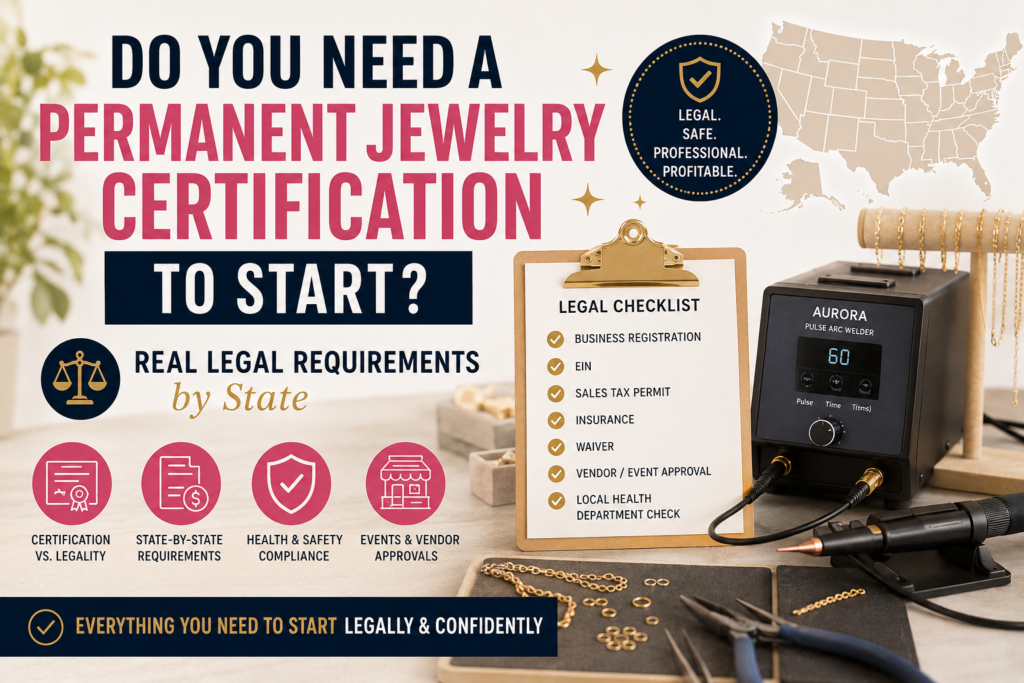
Do You Actually Need a Permanent Jewelry Certification?
One of the biggest questions new permanent jewelry business owners ask is simple:
Do you need a permanent jewelry certification to start legally?
The short answer is: usually, no.
In most states, there is no official government-issued “permanent jewelry certification” that you must have before welding bracelets, anklets, necklaces, or rings. Most permanent jewelry certificates come from private trainers, online courses, jewelry suppliers, or business coaches. They can help you learn the skill, but they are usually not the same thing as a legal license.
That is where a lot of beginners get confused.
A certificate from a permanent jewelry class may prove you completed training, but it usually does not replace the real business requirements like registering your business, getting a sales tax permit, checking local vendor rules, carrying insurance, and following event or salon requirements.
The real question is not just, “Do I need a certificate?”
The better question is:
What do I legally need to sell permanent jewelry in my state?
This guide breaks it down clearly.
The Simple Answer: Certification vs. Legal Requirements
A permanent jewelry certification is usually a private training certificate.
A legal requirement is something required by your state, city, county, tax department, venue, or event organizer.
Those are two different things.
| Requirement | Usually Legally Required? | What It Means |
|---|---|---|
| Permanent jewelry certification | Usually no | Private training proof, not usually a government license |
| Business registration | Sometimes | Depends on your structure and state |
| EIN | Sometimes | Free federal tax ID from the IRS |
| Sales tax permit / seller’s permit | Usually yes in most states | Lets you collect and remit sales tax |
| DBA / assumed name | Sometimes | Needed if you sell under a name different from your legal name |
| Local business license | Depends on city/county | Some cities require it |
| Vendor/event permit | Depends on where you sell | Markets, fairs, pop-ups, and malls may require it |
| Insurance | Sometimes required by venues | Strongly recommended even when not required |
| Tattoo/body piercing license | Usually no, unless your service crosses into body art | Permanent jewelry usually does not pierce skin |
The SBA explains that most small businesses may need a combination of licenses and permits depending on their business activity, location, and government agency requirements.
Is Permanent Jewelry Considered Tattooing or Body Piercing?
Usually, permanent jewelry is not the same as tattooing or body piercing because you are not putting ink into the skin and you are not creating a hole in the body.
Permanent jewelry normally means welding or closing a small jump ring around jewelry that sits on top of the skin. The jewelry is “permanent” because there is no clasp, not because it is implanted into the body.
That matters legally.
For example, New York’s body art rules apply to tattooing and body piercing operators and artists. The state says tattoo and body piercing operators need permits, and tattoo/body piercing artists need individual permits.
But permanent jewelry does not normally create a body piercing. So, in many places, it is treated more like selling jewelry or providing a retail jewelry service.
Still, you should be careful. Some local health departments, event organizers, malls, salons, or beauty suites may have their own rules. If you are working inside a salon, spa, tattoo shop, or public event, they may ask for extra documentation even if the state does not require a permanent jewelry certificate.
Why Do Permanent Jewelry Companies Use Certificates?
Even though most states do not require a permanent jewelry certification, many companies, trainers, and suppliers still offer certificates. The real reason is simple: certificates help sell training, build trust, and make the business look more professional.
A certificate does not automatically mean someone is legally licensed by the government. In most cases, it means the person completed a private course from a trainer, jewelry brand, supplier, or online program.
That does not make the certificate useless. It just means you need to understand what it really is.
1. Certificates Help Companies Sell Courses
One of the biggest reasons companies offer certificates is because it makes their course feel more valuable.
A beginner may be more willing to pay for a class if they believe they will be “certified” at the end. The certificate gives the course a finished result. Instead of just saying, “I watched a few training videos,” the student can say, “I completed a permanent jewelry certification course.”
For course creators, that certificate helps justify the price of the training.
For example, a course may include:
- Welding basics
- Chain sizing
- Jump ring placement
- Safety tips
- Customer workflow
- Pricing help
- Vendor setup
- A printable certificate
The certificate becomes part of the offer, even if it is not legally required by the state.
2. Certificates Build Customer Trust
Customers may not know the legal difference between a private certificate and a state license. When they see a certificate, they may feel more comfortable booking.
Permanent jewelry involves a welder, heat, jewelry touching the skin, and a service that feels personal. A customer may ask:
- “Are you trained?”
- “Is this safe?”
- “Have you done this before?”
- “Do you know how to use the machine?”
A certificate can help answer those questions. It shows that you took time to learn the process instead of guessing.
That is why many permanent jewelry businesses display their certificate at events, on their website, or on social media. It is a trust signal.
3. Certificates Help Event Hosts Feel Safer
Some event organizers, salons, boutiques, bridal shows, and pop-up markets may ask if you are trained or certified.
This does not always mean the state requires certification. It may simply mean the event host wants to reduce risk.
From their point of view, they are allowing you to set up around their customers. They may want proof that you understand:
- Basic welder safety
- Customer consent
- How to avoid burns
- How to handle jewelry allergies
- How to set up a clean station
- How to work around crowds
- How to use waivers and aftercare cards
A certificate gives them something easy to look at. It makes your business look more prepared.
4. Certificates Protect the Training Company’s Brand
Companies also use certificates to create authority around their own brand.
When a company says it has “certified” hundreds of permanent jewelry artists, it makes the company look more established. It helps them build a community of students and promote their training program.
This is common in beauty, jewelry, lashes, brows, nails, and other service-based industries.
The certificate helps the training company say:
- “Our students are trained.”
- “Our method is professional.”
- “Our course has value.”
- “Our brand is trusted.”
So the certificate is not just for the student. It also helps the company market itself.
5. Certificates Can Help With Insurance and Applications
Some insurance companies, event hosts, or vendor applications may ask about training. They may not always require a permanent jewelry certificate, but having one can make your application look stronger.
For example, if you are applying to a high-end bridal show or boutique pop-up, having a certificate may help show you are not brand new or careless.
It may also help you organize your business documents, along with:
- Business registration
- Sales tax permit
- Insurance certificate
- Waiver form
- Aftercare card
- Pricing menu
- Event setup photos
The certificate becomes one piece of your professionalism package.
6. Certificates Give Beginners Confidence
Another real reason certificates are popular is because beginners want confidence.
Permanent jewelry may look simple online, but when you first use a welder near someone’s wrist, it can feel intimidating. A class can help you feel more prepared.
A good course can teach you how to:
- Hold the jump ring correctly
- Place the protective leather patch
- Adjust welder settings
- Check if the weld is strong
- Avoid touching the customer’s skin
- Fix weak welds
- Explain aftercare clearly
The certificate is not the main value. The real value is the training behind it.
The Truth About Certificates
A permanent jewelry certificate is best seen as a training and marketing tool, not a legal license.
It can help you look professional, build customer trust, and get into better events. But it usually does not replace the legal requirements your state, city, county, or event host may have.
The real legal setup still comes down to things like:
- Business registration
- Sales tax permit
- DBA if needed
- Local vendor permits
- Insurance
- Waivers
- Safe operating practices
So before paying for a course just because it says “certification,” ask this question:
Does this course actually teach me how to operate safely, legally, and profitably — or am I only paying for a certificate?
That is the difference between buying a piece of paper and investing in real business training.
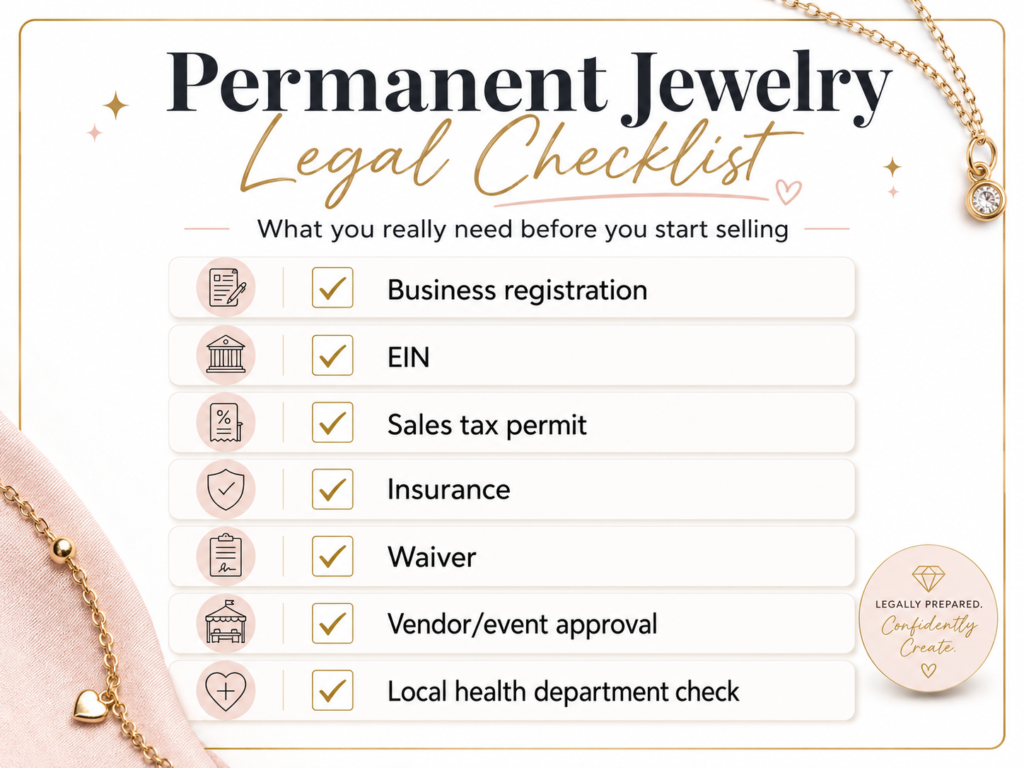
The Real Legal Requirements to Start a Permanent Jewelry Business
1. Choose a Business Structure
Before you start charging customers, decide how you want to operate.
Common options include:
- Sole proprietorship
- LLC
- Corporation
- Partnership
A sole proprietorship is the simplest, but an LLC can give your brand a more professional structure and may help separate business and personal matters. The SBA lists choosing a business structure, registering your business, getting tax IDs, applying for licenses and permits, opening a business bank account, and getting insurance as key startup steps.
For a permanent jewelry business, many beginners start as a sole proprietor or LLC.
2. Get an EIN
An EIN is an Employer Identification Number from the IRS. It is basically a federal tax ID for your business.
You may need an EIN if you form an LLC, hire employees, open a business bank account, or want to separate your business identity from your personal Social Security number.
The IRS says you can apply for an EIN directly from the IRS online, and it is free.
Important: do not pay a random website hundreds of dollars for an EIN. The IRS says you never have to pay a fee for an EIN.
https://www.irs.gov/businesses/small-businesses-self-employed/get-an-employer-identification-number
3. Register Your Business Name or DBA
If you are selling under a name like:
- Linked Luxe
- Forever Welded
- Golden Bond Jewelry
- Ty’s Permanent Jewelry
- Custom Charm Bar
…and that name is different from your legal name or LLC name, you may need a DBA, assumed name, or trade name registration.
This depends on your state and county.
For example, the SBA’s Buffalo District says business owners in that region may need to register a business name with the county clerk, while corporations register with the Secretary of State.
4. Get a Sales Tax Permit or Seller’s Permit
This is one of the biggest requirements people miss.
Permanent jewelry usually involves selling tangible personal property: chains, charms, connectors, anklets, bracelets, necklaces, and rings. In most states, jewelry sales are taxable.
That means you usually need to register with your state tax department before collecting sales tax.
For example, New York says you must register and obtain a Certificate of Authority if you will make taxable sales in New York State.
California says a seller’s permit is required if you are doing business in California and plan to sell tangible personal property subject to sales tax at retail.
Texas says sales tax permit holders must collect sales tax on taxable sales, report and pay sales tax, and keep records.
Florida says businesses registered to collect sales tax are issued an Annual Resale Certificate for Sales Tax, which allows qualifying resale purchases to be made tax-free.
5. Check Local Business Licenses
Some cities and counties require a general business license, even if your state does not require a special permanent jewelry license.
This can depend on whether you sell:
- From home
- At pop-up events
- Inside a salon
- At vendor markets
- At malls
- At bridal expos
- At private parties
- Online
- At fairs and festivals
This is why your local city clerk, county clerk, or small business office matters.
6. Check Vendor, Market, and Event Rules
Even if your state does not require a permanent jewelry certificate, an event host might.
For example, a farmers market, fair, mall pop-up, wedding expo, boutique, salon, or private venue may ask for:
- Business license
- Sales tax permit
- Certificate of insurance
- Vendor application
- Signed waiver
- Fire/safety setup approval
- Extension cord policy
- Table display approval
- Proof of training
- Permanent jewelry certificate
That does not mean the state requires certification. It means the venue requires it.
This is common.
7. Get Business Insurance
Insurance is not always legally required by the state, but it is highly recommended.
Permanent jewelry involves heat, welding equipment, jewelry touching the skin, customer service, and in-person events. A small burn, allergic reaction claim, damaged property issue, or event accident could become a problem.
Common coverage to ask about:
- General liability insurance
- Product liability insurance
- Professional liability coverage
- Inland marine coverage for equipment
- Event vendor insurance
Many event organizers will not approve you without insurance.
8. Use Waivers and Aftercare Forms
A waiver does not replace safe work, but it helps communicate risk and set expectations.
Your waiver should cover:
- Customer consent
- Age policy
- Metal allergy warning
- Skin sensitivity warning
- Welding safety notice
- No refund/custom work policy
- Jewelry care instructions
- Removal instructions
- Photo/video permission if you plan to post content
You should also provide an aftercare card explaining how to protect the jewelry from chemicals, pools, lotions, perfumes, tugging, sports, and rough handling.
State-by-State Permanent Jewelry Requirement Guide
Here is the most honest way to look at it:
No state is commonly known to require a state-issued “permanent jewelry certification” specifically. Permanent jewelry is usually regulated through normal business, sales tax, local vendor, and event rules.
The biggest state-level difference is usually sales tax registration.
Five states have no statewide sales tax: Alaska, Delaware, Montana, New Hampshire, and Oregon. Alaska can still have local sales taxes, so you still need to check the city or borough.
Most other states have statewide sales tax, which usually means you need some form of sales tax permit, seller’s permit, sales tax license, vendor’s license, or tax registration before selling jewelry.
States Where You Usually Need a Sales Tax Permit for Permanent Jewelry
These states generally have statewide sales tax, so permanent jewelry sellers should expect to register with the state tax department before selling taxable jewelry:
| State | Likely Requirement for Permanent Jewelry Sellers |
|---|---|
| Alabama | Sales tax license / seller registration |
| Arizona | Transaction privilege tax license |
| Arkansas | Sales tax permit |
| California | Seller’s permit |
| Colorado | Sales tax license |
| Connecticut | Sales and use tax permit |
| Florida | Sales tax registration / Annual Resale Certificate |
| Georgia | Sales and use tax registration |
| Hawaii | General excise tax license |
| Idaho | Seller’s permit |
| Illinois | Retailer tax registration |
| Indiana | Registered retail merchant certificate |
| Iowa | Sales tax permit |
| Kansas | Retailers’ sales tax registration |
| Kentucky | Sales and use tax permit |
| Louisiana | Sales tax registration |
| Maine | Sales tax registration |
| Maryland | Sales and use tax license |
| Massachusetts | Sales and use tax registration |
| Michigan | Sales tax license |
| Minnesota | Sales and use tax registration |
| Mississippi | Sales tax permit |
| Missouri | Retail sales tax license |
| Nebraska | Sales tax permit |
| Nevada | Sales tax permit |
| New Jersey | Business/tax registration for sales tax |
| New Mexico | Gross receipts tax registration |
| New York | Certificate of Authority |
| North Carolina | Sales and use tax registration |
| North Dakota | Sales tax permit |
| Ohio | Vendor’s license |
| Oklahoma | Sales tax permit |
| Pennsylvania | Sales tax license |
| Rhode Island | Retail sales permit |
| South Carolina | Retail license |
| South Dakota | Sales tax license |
| Tennessee | Sales and use tax certificate |
| Texas | Sales tax permit |
| Utah | Sales tax license |
| Vermont | Sales and use tax account |
| Virginia | Sales tax certificate |
| Washington | Business license / sales tax registration |
| West Virginia | Business registration certificate |
| Wisconsin | Seller’s permit |
| Wyoming | Sales/use tax license |
| Washington, D.C. | Sales and use tax registration |
This does not mean every state has the exact same process. The name of the permit changes by state, but the idea is similar: you need permission to collect sales tax on taxable sales.
State Nuance: Where Local Rules Can Get Tricky
Sales tax is only one part of permanent jewelry compliance. The bigger issue is that some states leave service regulation to counties, cities, health departments, event organizers, or industry-specific agencies.
That means a state may not require a permanent jewelry certification, but a local county, salon, body art program, or venue may still require extra paperwork.
California
California is one of the most important states to check carefully because many counties regulate body art through local environmental health departments.
Traditional body art includes tattooing, piercing, branding, and permanent cosmetics. Permanent jewelry usually does not pierce the skin, but if a county or venue believes your setup overlaps with body art safety concerns, they may ask for additional documentation.
Los Angeles County has a body art program focused on body art business requirements and infection-control risks, including bloodborne pathogens. Orange County states that body art practitioners must obtain registration and complete annual BBP exposure control training.
For California permanent jewelry sellers, the safest move is to contact:
- Your county environmental health department
- Your city business license office
- The event organizer
- The venue or salon owner
- The California Department of Tax and Fee Administration for seller’s permit rules
Do not assume one California county is the same as another.
Florida
Florida permanent jewelry sellers should check both tax registration and local business rules.
If you are selling jewelry, you usually need to register to collect and remit sales tax. But if you are setting up in a salon, beauty suite, tattoo shop, spa, or public event, you should also ask the local county or venue if they classify your service under any health, body art, or establishment rules.
Do not wait until an event organizer or inspector asks questions. Before launching, call the county directly and ask whether permanent jewelry welding is treated as:
- Jewelry retail
- A vendor service
- A salon service
- A body art-related service
- A temporary event activity
The key is to get local clarification before you invest in events.
Texas
Texas permanent jewelry sellers should pay attention to where they operate.
If you sell at pop-ups or events, sales tax registration and vendor rules matter. If you set up inside a salon, beauty suite, or cosmetology-related space, you also need to understand how the salon is licensed and how independent operators are handled.
The Texas Department of Licensing and Regulation regulates barbering and cosmetology establishments. TDLR says businesses that lease space to mini-establishments must hold an establishment license, and an establishment leasing space may need to include an independent contractor list with application materials.
That does not automatically mean permanent jewelry requires a cosmetology license. It means if you operate inside a regulated salon environment, the setup must follow the rules of that space.
For Texas, check:
- Texas Comptroller for sales tax permit
- City/county vendor rules
- TDLR rules if inside a salon or beauty establishment
- Event insurance requirements
- Independent contractor or booth rental paperwork
States With No Statewide Sales Tax
These states do not have a statewide sales tax:
| State | Does That Mean No Requirements? | What to Check |
|---|---|---|
| Alaska | No | Local borough/city sales tax may apply |
| Delaware | No | Business license/gross receipts rules may apply |
| Montana | No | Local resort taxes may apply in some areas |
| New Hampshire | No | Business taxes and local rules may apply |
| Oregon | No | Business registration and local rules may apply |
No statewide sales tax does not mean you can skip all legal setup. You may still need business registration, local vendor permits, event approval, insurance, or local tax compliance.
What New York Permanent Jewelry Sellers Usually Need
If you are starting in New York, do not focus only on “certification.” Focus on the real business setup.
For New York, you should usually check:
- LLC or sole proprietor setup
- EIN from the IRS
- DBA if using a different business name
- NYS Certificate of Authority for sales tax
- Local vendor permits if selling in public spaces
- Event requirements for fairs, pop-ups, salons, and markets
- Insurance
- Customer waiver and aftercare form
New York says businesses making taxable sales must register with the Tax Department and obtain a Certificate of Authority.
That is usually more important legally than a private permanent jewelry certificate.
https://www.tax.ny.gov/bus/st/register.htm
What California Permanent Jewelry Sellers Usually Need
California sellers should usually check:
- Business registration
- Seller’s permit
- City or county business license
- DBA if needed
- Insurance
- Temporary seller’s permit if selling temporarily at events
- Event/venue requirements
California says a seller’s permit is required if you are engaged in business in California and intend to sell tangible personal property subject to sales tax at retail. It also says temporary sellers may need a temporary seller’s permit.
https://cdtfa.ca.gov/services/permits-licenses.htm
What Texas Permanent Jewelry Sellers Usually Need
Texas sellers should usually check:
- Sales tax permit
- Business name registration if using a DBA
- LLC or sole proprietor setup
- Insurance
- Event/vendor requirements
- Local city rules
Texas says sales tax permit holders must post their permit, collect sales tax on taxable sales, file sales tax returns, pay taxes, and keep records.
What Florida Permanent Jewelry Sellers Usually Need
Florida sellers should usually check:
- Business registration
- Sales tax registration
- Annual Resale Certificate
- Local business tax receipt
- Event/vendor permits
- Insurance
Florida says businesses that register with the Department of Revenue to collect sales tax are issued an Annual Resale Certificate for Sales Tax.
Do You Need a Class Before Starting Permanent Jewelry?
Legally, usually no.
Practically, yes, you should get trained before working on paying customers.
Permanent jewelry uses a small welder or pulse arc machine to close a jump ring. The process is quick, but you still need to know what you are doing.
A good class teaches:
- How to size bracelets and anklets
- How to choose chain types
- How to use jump rings
- How to safely operate the welder
- How to avoid burning the customer
- How to protect the skin during welding
- How to test welds
- How to adjust machine settings
- How to handle allergic reactions or sensitivities
- How to price services
- How to set up at events
- How to use waivers and aftercare cards
Training is not just about the certificate. It is about confidence, safety, speed, and professionalism.
Different Types of Permanent Jewelry Courses and Classes
1. Free Walkthrough or Starter Kit
This is the best place for most beginners to start.
A free walkthrough or kit should help you understand the business before spending money on a course.
It can include:
- Equipment checklist
- Startup cost breakdown
- Legal setup checklist
- Sales tax reminder
- Vendor event checklist
- Pricing guide
- Waiver template
- Aftercare card
- First pop-up checklist
- Basic welding safety notes
This is perfect if you are still deciding whether permanent jewelry is worth it.
2. Online Permanent Jewelry Course
Online courses are usually cheaper and flexible.
They may include:
- Video lessons
- Equipment recommendations
- Chain sourcing tips
- Basic welding demonstrations
- Downloadable templates
- Certificate of completion
Best for beginners who want to learn at home before practicing.
The downside is that nobody is physically watching your technique.
3. In-Person Permanent Jewelry Training
In-person training is usually more expensive but more hands-on.
You may get:
- Live welding practice
- Trainer feedback
- Equipment setup help
- Chain sizing practice
- Troubleshooting
- Mock customer practice
- Certificate of completion
This is good if you want confidence faster.
4. Private One-on-One Training
Private training is usually the most expensive, but it can be customized.
This works well if you already bought equipment and want someone to help you set it up, test welds, and build your process.
5. Supplier-Based Training
Some jewelry suppliers and welder companies offer training when you buy equipment.
This can be helpful because they know their own machines, chains, jump rings, and tools.
6. Business-Focused Permanent Jewelry Course
Some classes focus less on welding and more on making money.
They may cover:
- Branding
- Pricing
- Pop-up booking
- Website setup
- Social media content
- Vendor outreach
- Event scripts
- Upselling charms
- Email/text booking systems
This is useful once you understand the technical side.
What a Good Permanent Jewelry Class Should Include
Do not buy a course just because it says “certification.”
Look for actual value.
A good course should include:
| Course Topic | Why It Matters |
|---|---|
| Welder safety | Prevents burns and mistakes |
| Chain sizing | Helps bracelets fit correctly |
| Jump ring selection | Improves durability |
| Machine settings | Helps create cleaner welds |
| Practice drills | Builds confidence |
| Customer workflow | Makes appointments smoother |
| Waivers | Helps protect your business |
| Aftercare | Reduces complaints |
| Pricing | Helps you stay profitable |
| Vendor setup | Helps you book events |
| Troubleshooting | Helps fix weak welds or bad connections |
A certificate is only useful if the training behind it is solid.
Do You Need Cosmetology, Esthetician, Tattoo, or Piercing License?
Usually, permanent jewelry does not require a cosmetology, esthetician, tattoo, or piercing license because you are not cutting hair, treating skin, tattooing, or piercing the body.
However, there are exceptions to check:
- If your local health department classifies your setup as body art
- If you operate inside a tattoo/body piercing shop
- If your venue requires body art-style paperwork
- If you offer services that involve skin puncture
- If you combine permanent jewelry with other beauty services
- If your state/city has special public event rules
If you are only welding jewelry around the wrist, ankle, neck, or finger without piercing skin, it is usually treated as jewelry retail/service work.
But always check locally.
Hidden Legal Trap: Bloodborne Pathogens Certification
A permanent jewelry certification is not usually required by state or federal law, but some local health departments may look at permanent jewelry differently depending on how the service is performed, where it is offered, and whether it is grouped near body art services.
This is where Bloodborne Pathogens certification, also called BBP certification, can matter.
Bloodborne Pathogens training teaches basic safety around cross-contamination, exposure control, sanitizing surfaces, handling tools, and protecting both the client and the operator. It is commonly required in tattooing, piercing, permanent makeup, and body art spaces.
Permanent jewelry usually does not pierce the skin, but some local counties may still ask questions if the service is offered inside a tattoo studio, beauty salon, body art facility, fair, or pop-up event. California counties, for example, often regulate body art through local environmental health departments, and body art practitioners may be required to complete bloodborne pathogens training under local body art rules. Orange County states that body art practitioners must complete annual BBP exposure control training, and Los Angeles County has a body art program that focuses on infection risks and bloodborne pathogen prevention. https://ochealthinfo.com/sites/healthcare/files/2023-11/Body_Art_BBP_Approved_Training_10-26-23_final.pdf?utm_source=chatgpt.com
This does not mean every permanent jewelry artist automatically needs BBP certification. It means you should ask your local county health department directly:
“Is permanent jewelry welding regulated as body art, jewelry retail, or a general vendor service in this county?”
You should especially ask if you are setting up inside:
- A tattoo shop
- A piercing studio
- A permanent makeup studio
- A salon or spa
- A county fair
- A mall kiosk
- A public pop-up event
Even if BBP training is not required in your area, it can still be smart to take. It shows professionalism, helps protect customers, and may help you get approved for better events.
Welder Safety & Argon Gas Compliance
Another detail many beginner guides skip is welder safety.
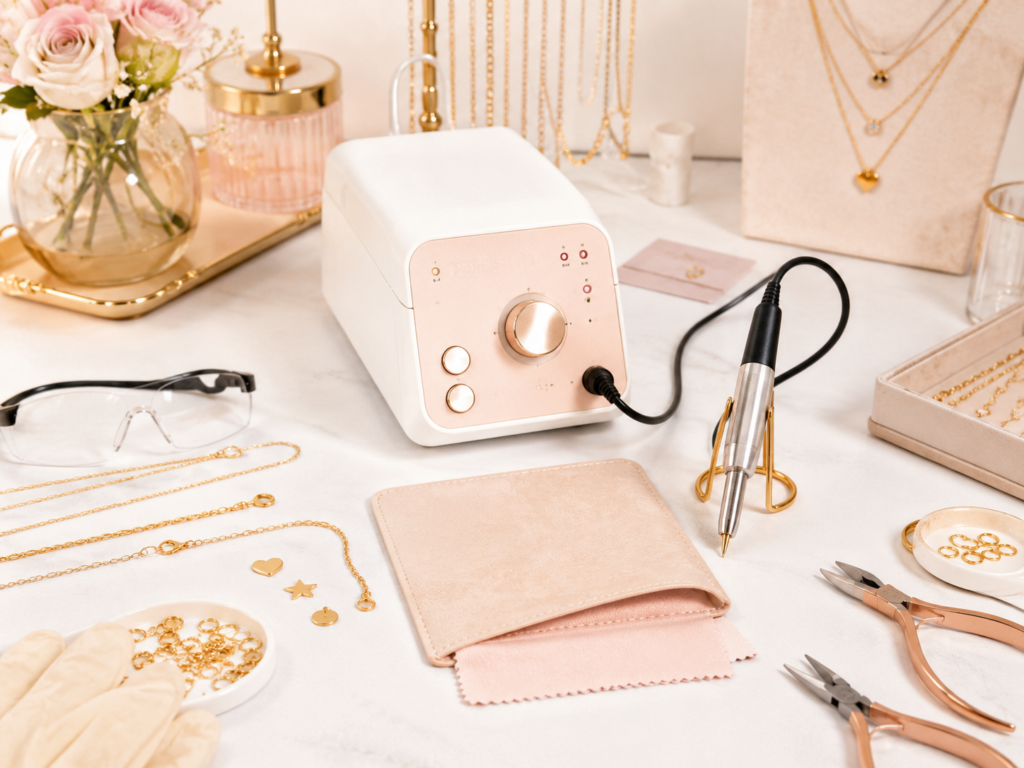
Most professional permanent jewelry businesses use a pulse arc welder or micro-welding machine to close the jump ring. Some machines use argon gas to create a cleaner weld, reduce oxidation, and improve the finished look of the jewelry.
This is not just a technical detail. It can also become a compliance issue.
If your permanent jewelry setup uses an argon gas tank, you may need to check venue rules and local fire codes for compressed gas storage, especially at pop-ups, markets, salons, malls, and indoor events.
Before bringing an argon tank to an event, ask the organizer:
- Are compressed gas tanks allowed?
- Does the tank need to be secured upright?
- Are there fire marshal rules for indoor vendor booths?
- Are extension cords and power strips allowed?
- Do you need proof of insurance?
- Do you need to list your equipment on the vendor application?
Argon is commonly used in welding applications, and compressed gas cylinders are subject to safety handling rules. OSHA’s welding and compressed gas guidance focuses on proper handling, storage, and protection of gas cylinders in workplace settings. https://permits.sjgov.org/Departments/Environmental-Health/Body-Art-Program?
This kind of safety detail is one reason training matters. A permanent jewelry certification may not be legally required, but a good course should teach safe equipment setup, clean workstation habits, customer protection, and event compliance.
The Real Startup Checklist
Before taking your first paid customer, complete this checklist:
- Choose your business name
- Decide if you want a sole proprietor setup or LLC
- Get an EIN from the IRS if needed
- Register your DBA if using a trade name
- Apply for your sales tax permit or seller’s permit
- Open a business bank account
- Buy your permanent jewelry welder
- Buy quality chain, jump rings, charms, and tools
- Practice welds before taking customers
- Create a waiver
- Create an aftercare card
- Get insurance
- Build your pricing menu
- Make your booking system
- Apply to vendor events
- Create social media content
- Track sales and taxes
- Keep customer records
How Much Does a Permanent Jewelry Course Cost?
Permanent jewelry training prices can vary a lot.
Typical ranges:
| Type of Training | Estimated Cost |
|---|---|
| Free guide/walkthrough | $0 |
| Beginner online course | $50–$500 |
| Full online certification course | $300–$1,500 |
| In-person group training | $500–$2,500 |
| Private one-on-one training | $1,000–$5,000+ |
| Supplier training package | Sometimes included with equipment |
The price does not always mean the course is better. Before paying, look at the instructor’s experience, student results, refund policy, reviews, course outline, and whether they teach both safety and business setup.
Should You Get Certified Anyway?
Yes, certification can still help.
It can make your business look more professional, especially if you are applying to:
- Bridal shows
- Luxury pop-ups
- Salons
- Boutiques
- Vendor markets
- Corporate events
- Private parties
- Beauty suites
- Malls
Certification can also help with confidence. If a customer asks, “Are you trained?” it feels better to say yes and explain your process.
But do not confuse certification with legal compliance.
You can be certified and still be illegal if you forgot your sales tax permit.
You can also be legally registered and still be unsafe if you never learned how to weld properly.
You need both sides:
Legal setup + real training.
The Better First Step: Use a Free Permanent Jewelry Walkthrough/Kit
Before spending hundreds or thousands on a course, start with a free walkthrough or starter kit.
A good free kit should help you answer:
- What equipment do I need?
- What permits should I check?
- Do I need sales tax registration?
- What should I charge?
- How do I set up at events?
- What should be in my waiver?
- What should my aftercare card say?
- What chains and charms should I start with?
- How do I book my first pop-up?
This is a smarter first move because you can understand the business before buying a course.
Then, once you know permanent jewelry is something you really want to pursue, you can decide if an online course, in-person class, or private training makes sense.
Ready to Choose the Right Permanent Jewelry Welder?
Before you buy a course or start booking clients, make sure you understand the tool that actually powers your service: the welder. Your permanent jewelry setup is only as good as the machine, safety tools, and supplies you use.
If you are still comparing machines, pricing, and beginner-friendly options, read my full guide here:
👉 Best Permanent Jewelry Welder for Beginners: What to Know Before You Buy
This guide breaks down what to look for in a permanent jewelry welder, how pulse arc welding works, what features matter, and what beginners should avoid before spending money.
FAQ
Do you need a certification to do permanent jewelry?
No, there is no state or federal law requiring a permanent jewelry certification to operate in most cases, but you will usually need standard local business permits, sales tax registration, insurance, and event approval before selling.
Is permanent jewelry regulated?
While not regulated on a federal level as its own separate industry, permanent jewelry is regulated locally through general business licensing, state sales tax permits, vendor rules, venue policies, and occasionally county health department body art rules.
Do you need a license for permanent jewelry?
Usually, you do not need a special permanent jewelry license, but you may need a business license, sales tax permit, seller’s permit, vendor permit, or local approval depending on your state, city, county, and selling location.
Do you need Bloodborne Pathogens certification for permanent jewelry?
Not always. Bloodborne Pathogens certification is usually connected to tattooing, piercing, permanent makeup, and body art, but some counties, salons, tattoo shops, or event organizers may request it if they believe permanent jewelry creates health or cross-contamination concerns.
Do you need a cosmetology license for permanent jewelry?
Usually, no. Permanent jewelry is normally not cosmetology because you are not cutting hair, treating skin, doing nails, or performing esthetic services. However, if you operate inside a salon or beauty suite, you must follow the rules of that licensed space.
Do you need a tattoo or piercing license for permanent jewelry?
Usually, no, because permanent jewelry normally does not pierce the skin. However, some counties may regulate services differently, especially in body art environments, so you should ask the local health department before setting up.
Final Answer: Certification Is Not the Main Legal Requirement
So, do you need a permanent jewelry certification to start?
Usually, no.
But you do need to treat permanent jewelry like a real business.
The real requirements are usually:
- Business registration
- Sales tax permit or seller’s permit
- DBA if needed
- Local business license if required
- Vendor/event approval
- Insurance
- Waivers
- Aftercare instructions
- Safe training and practice
A private certification can help you look professional, but it does not replace legal setup.
.