
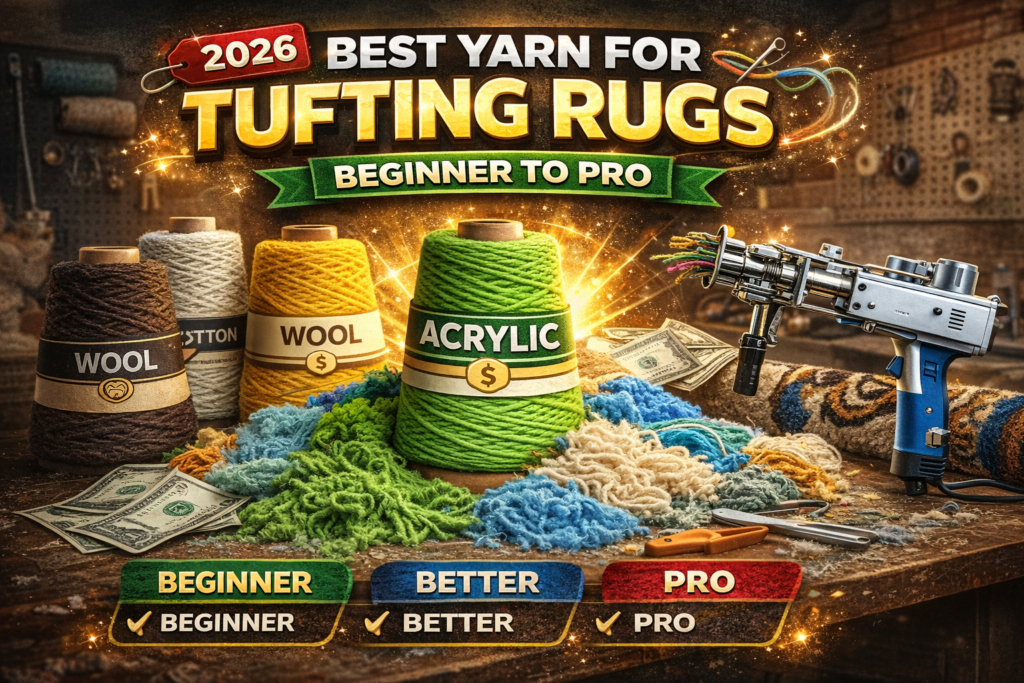
“Best Yarn for Tufting Rugs (Beginner to Pro)”
If you’re getting into rug tufting, choosing the right yarn can make or break your results. The best yarn for tufting rugs in 2026 depends on durability, softness, and how well it holds shape over time.
Whether you’re a beginner or trying to create high-quality rugs to sell, this guide breaks down what yarn professionals actually use—and which ones you should avoid.bIf your rugs don’t look clean, soft, or professional…
👉 It’s probably your yarn.
A lot of beginners focus on the tufting gun — but your yarn actually determines:
- How your rug feels
- How long it lasts
- How clean it looks
In this guide, I’ll break down:
- The best yarn for beginners
- What pros use
- What to avoid
- EXACTLY what you should buy
The 3 Main Types of Tufting Yarn
You only need to understand these 3:
1. Acrylic Yarn (BEST FOR BEGINNERS)
👉 Cheap, easy, everywhere
Pros:
- Tons of colors
- Affordable
- Easy to find
Cons:
- Less durable
- Can get fuzzy over time
Acrylic is the #1 beginner choice because it’s easy and low risk
2. Wool Yarn (BEST QUALITY)
👉 What professionals use
Pros:
- Super durable
- Holds shape
- Premium feel
Cons:
- Expensive
Wool is best for rugs that will be walked on — it lasts way longer
3. Cotton Yarn (MID OPTION)
Balanced choice
Pros:
- Natural
- Decent durability
Cons:
- Not as strong as wool
👉 Good for lighter rugs or decor
Best Yarn Setup (Simple Answer)
If you just want the BEST combo:
👉 Beginner: Acrylic yarn
👉 Selling rugs: Blend or better acrylic
👉 High-end rugs: Wool yarn
What Pros Actually Use (Real Talk)
From real tufting community experience:
“Wool is more durable… stays beautiful for decades”
👉 But beginners still use acrylic because:
- It’s cheaper
- Easier to learn
Yarn Thickness (VERY IMPORTANT)
👉 Use: Medium / worsted weight yarn
Too thin = weak rugs
Too thick = hard to control
👉 Many tufters use 2 strands at once for better thickness and cleaner lines
Best Yarn Brands for Tufting
Beginner Picks:
- Red Heart (cheap + reliable)
- Lion Brand
- Big Twist (budget option)
- You can find high-quality yarn options on Amazon or craft stores like Joann Fabrics.
Better Quality:
- Tufting-specific yarn brands
- Wool cones (pro level)
Yarn Mistakes That Ruins Rugs
Using cheap thin yarn
Leads to:
- Weak rugs
- Bad texture
- Bad Results
Mixing random yarn types
Different textures = messy look
Not feeding yarn properly
Causes skipping + uneven lines
Using super soft yarn
Won’t hold shape well
What Yarn Should YOU Use?
👉 If you’re just starting:
- Acrylic yarn (keep it simple)
👉 If you’re selling:
- Better acrylic or blends
👉 If you’re building a brand:
- Move to wool for premium rugs
Pro Tips (Game-Changer)
👉 Wind yarn onto cones → smoother feeding
👉 Keep yarn tight when tufting
👉 Match yarn thickness with your gun
Final Thoughts
Your yarn = your quality
👉 Cheap yarn = cheap results
👉 Good yarn = clean, sellable rugs, quality
Start simple → upgrade → charge more
Check out our full guide on starting a tufting business here
: FAQ – Best Yarn for Tufting Rugs
Q1: What is the best yarn for tufting rugs?
The best yarn for tufting rugs is typically acrylic or wool. Acrylic yarn is affordable and durable, while wool yarn offers a more premium feel and long-lasting quality.
Q2: Is acrylic yarn good for tufting rugs?
Yes, acrylic yarn is one of the most popular choices for tufting rugs because it’s inexpensive, easy to work with, and holds up well for everyday use.
Q3: Do professionals use wool yarn for tufting rugs?
Professional rug makers often use wool yarn because it is more durable, stain-resistant, and gives a high-end finish compared to cheaper yarn options.
Q4: What yarn should beginners use for tufting rugs?
Beginners should start with acrylic yarn because it’s budget-friendly and easier to control while learning how to tuft.
Q5: How much yarn do you need for a tufted rug?
The amount depends on size, but a 3×3 ft rug usually requires 4–6 pounds of yarn depending on density and design.
Q6: What yarn should you avoid for tufting rugs?
Avoid stretchy or very thin yarns because they can break easily and won’t hold structure well in your rug.
“`html id=”tuftingyarnfaq02″ “`
One Response